Article
Universities are busy signing big AI deals to give every student a "copilot" or "study assistant" 🤖.
Originally posted on LinkedIn on November 27, 2025.
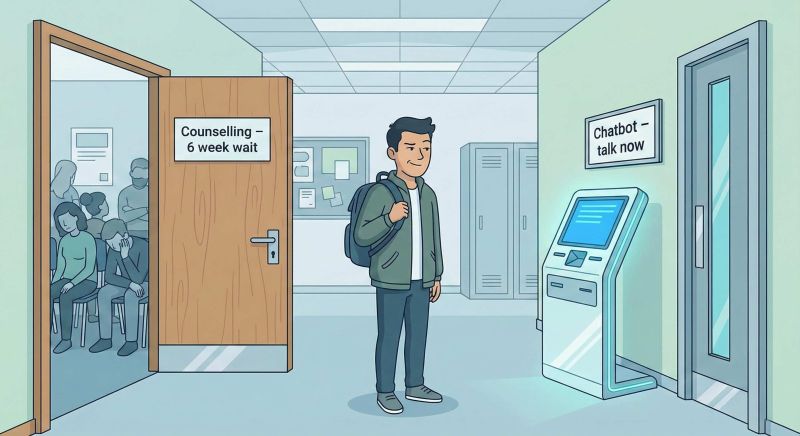
Universities are busy signing big AI deals to give every student a “copilot” or “study assistant” 🤖. Far fewer strategy papers ask the obvious question: what happens when a distressed 19-year-old starts confiding in it at 2 a.m.? Recent lawsuits in California allege that ChatGPT contributed to severe mental health harms and even suicides. Whatever the eventual legal outcome, they should at least jolt us out of the comforting fiction that these systems are just spellcheckers with better chat. Students do not neatly separate “academic queries” from “existential dread”, and an always-on conversational partner is unlikely to respect the boundary either. Once you deploy a chatbot under the university’s banner, it becomes part of your mental health ecosystem 🎓. Safety guardrails and reassuring blogposts may reduce the worst outputs, but they are not a safeguarding policy. Yet AI procurement is usually framed as an innovation or efficiency project, routed through IT and digital committees, while duty of care, clinical risk and equality impacts quietly sit in someone else’s inbox. This is fixable. AI strategies need to be reviewed with student support, welfare and equality teams at the table, not in a separate edtech universe. Institutions need clear language about what these tools are and are not, testing that focuses on distress and self-harm scenarios, and a firm refusal to treat chatbots as a cheap substitute for human support 🧠. In your institution, who actually owns the question “what does this AI do to our mental health ecosystem?” And, bluntly, is it on anyone’s risk register yet? ⚠️ Link: https://lnkd.in/dsyvMNGT #HigherEducation #AIinEducation #StudentMentalHealth #EdTech #AIethics #UniversityLeadership #DigitalStrategy